
For veterinary practices
Veterinary software: what it actually has to solve.
Almost every system shows a tidy calendar in the demo. What separates one that gets used from one abandoned after two months is something else — worth knowing before you enter the first patient.
- Appointments
- Medical Records
- Cash Control
What a clinic needs isn't a calendar
When a practice goes looking for software, the first thing it evaluates is the appointment screen, because it's the easiest thing to compare. But scheduling is the trivial part: every system has it and no clinic ever closed for want of one.
The real work sits in three things that cross constantly. The patient, who has a history someone will need to read in two years. The owner, who pays, who receives the vaccine reminder, and who may have three animals. And stock, which in a veterinary practice is pharmacy: it's sold, it's administered in consultation, and it comes off from different places.
A system that handles those three separately makes you enter the same client three times and discover at month end that inventory doesn't reconcile. The useful question when evaluating isn't which modules exist, it's whether those three talk to each other.
The questions worth asking before choosing
The first is whether the clinical record is reachable from any room and by any clinician with permission. A practice with two vets and a Saturday shift finds out quickly that a record tied to one computer doesn't work.
The second is what happens to product administered during a consultation. If applying a flea treatment doesn't deduct stock automatically, inventory is an estimate from day one, because nobody will enter it by hand between patients.
The third, and the most overlooked, is whether you can get your data out. Clinical records belong to the practice. A system that makes exporting them difficult is expensive in a way that never appears in the monthly price, and you only find out the day you want to leave.
From paper to software without stopping
The most common reason a practice postpones this isn't cost, it's fear of migration. And that's well founded, because the usual approach — transcribing years of records before starting — never gets finished.
The approach that works is the reverse. Start with the calendar and the patients coming in this week, who are the only ones you need today. Each returning patient is entered once, and in three or four months the practice is digital without anyone having transcribed a folder.
The paper archive is kept for reference and stops growing. It becomes a dead archive rather than a parallel system, which is exactly the difference between migrating and running two systems forever.
What it should cover
A record per patient
Timeline, weight per visit, vaccines with due dates, attached studies.
Owner and their pets
One account per person, with several animals hanging off it.
Real appointment lengths
Each consult type with the time it takes, and booking from your site.
Pharmacy stock
What's sold and what's administered, coming off one inventory.
Cash and invoicing
Charges by consult and by product, with a daily close that balances.
Reminders
The vaccine coming due prompts itself, which is what fills next month.
See what that looks like solved
Every Siimplo module, the way your team will use it.
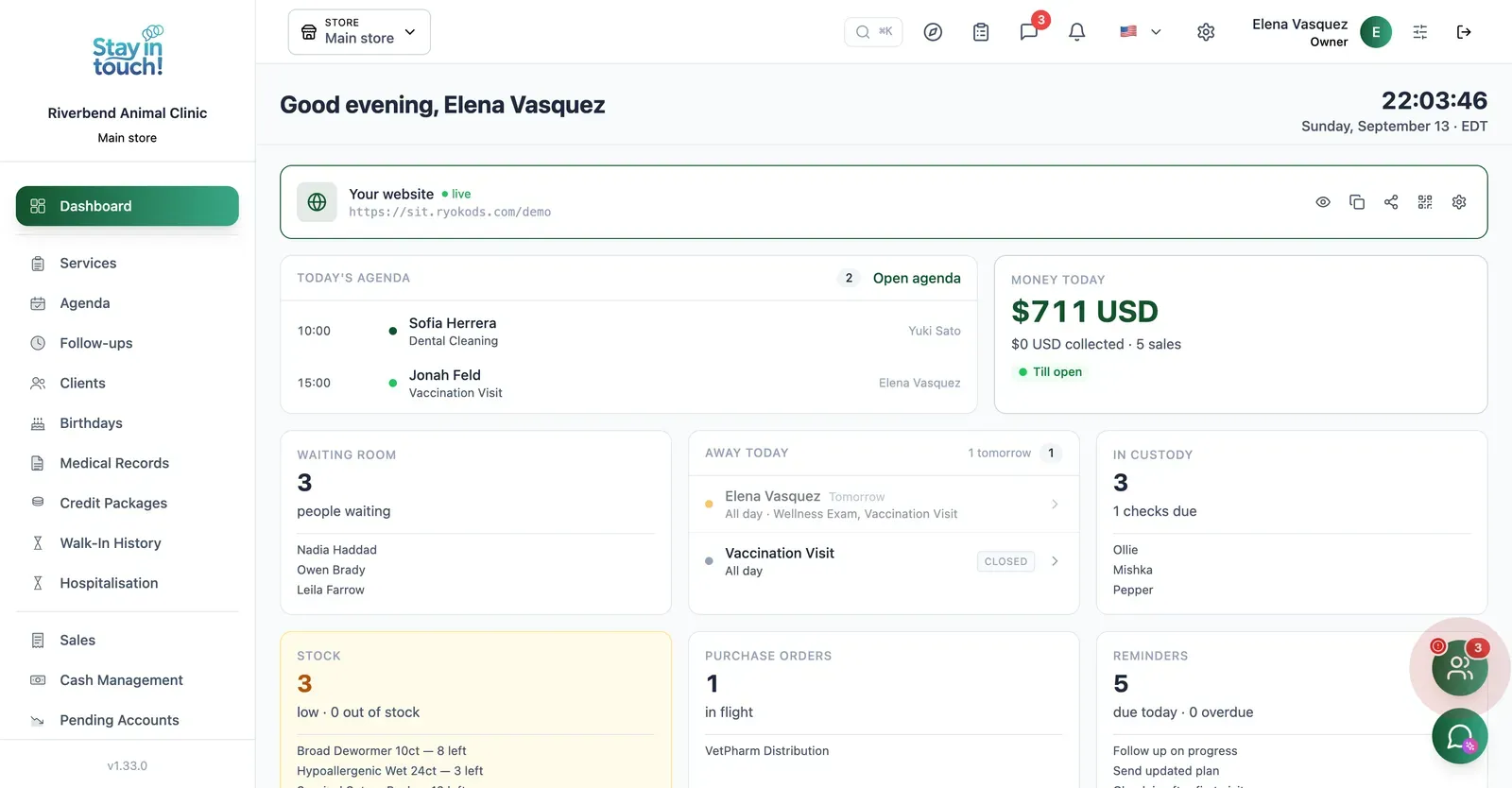
Dashboard
Today's appointments, your client count and the booking link pet owners use — the whole clinic on one screen.
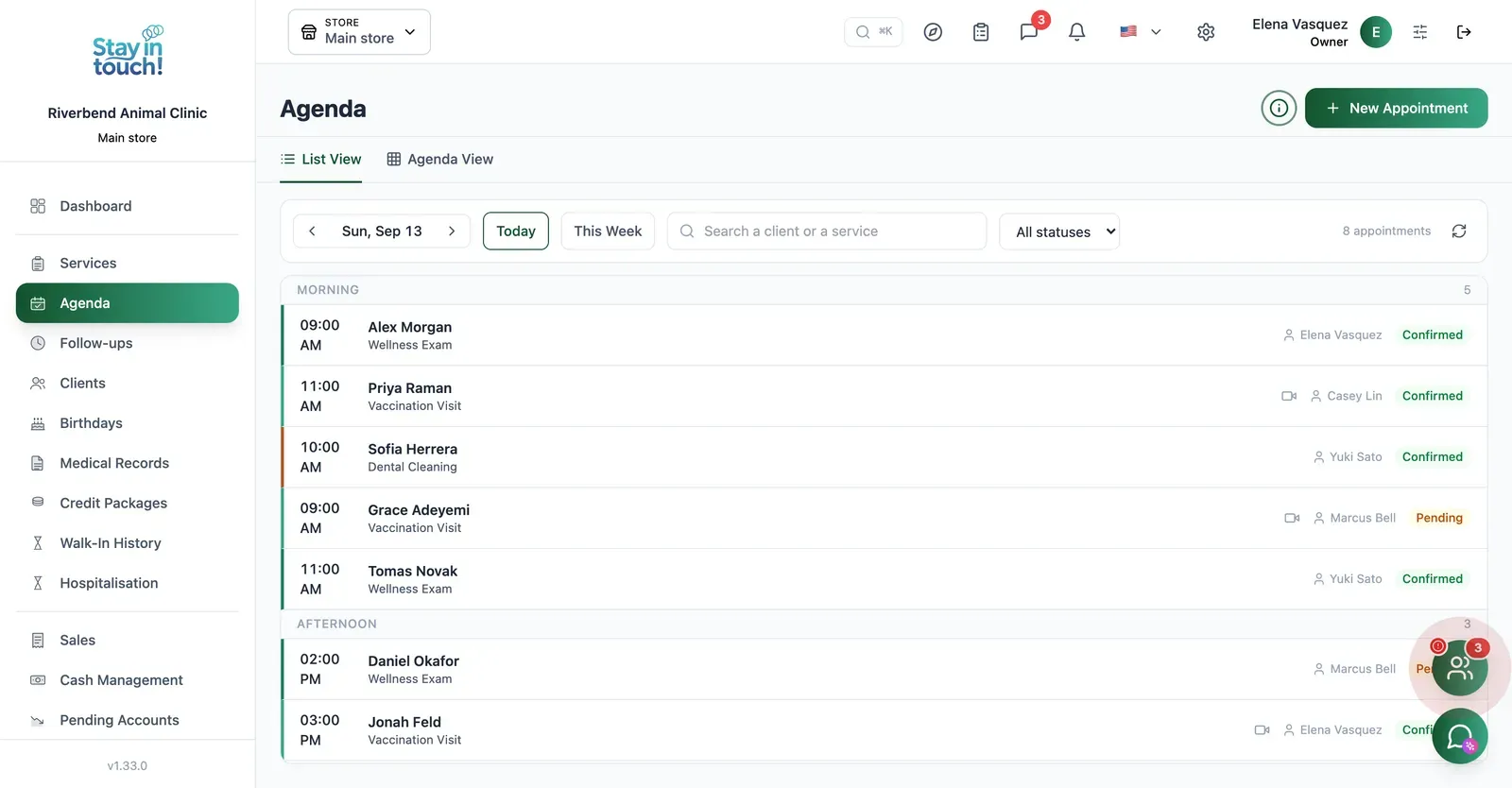
Appointments
The day's bookings with the service, the vet assigned and confirmation status, in list or calendar view.
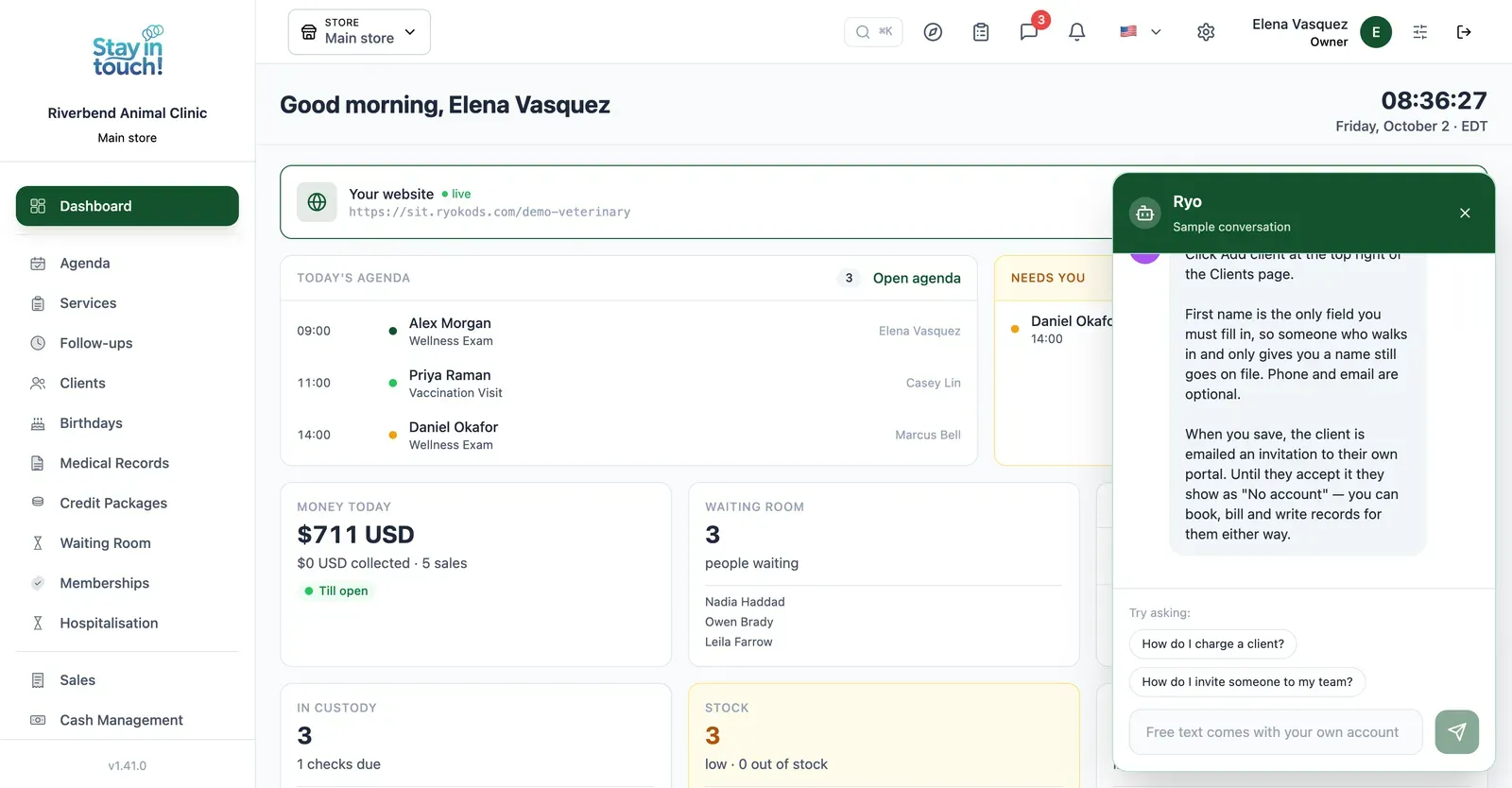
Ryo, the AI assistant
Ask in your own words and it walks you through Siimplo step by step; it also reads your real schedule and drafts the appointment for you to confirm.
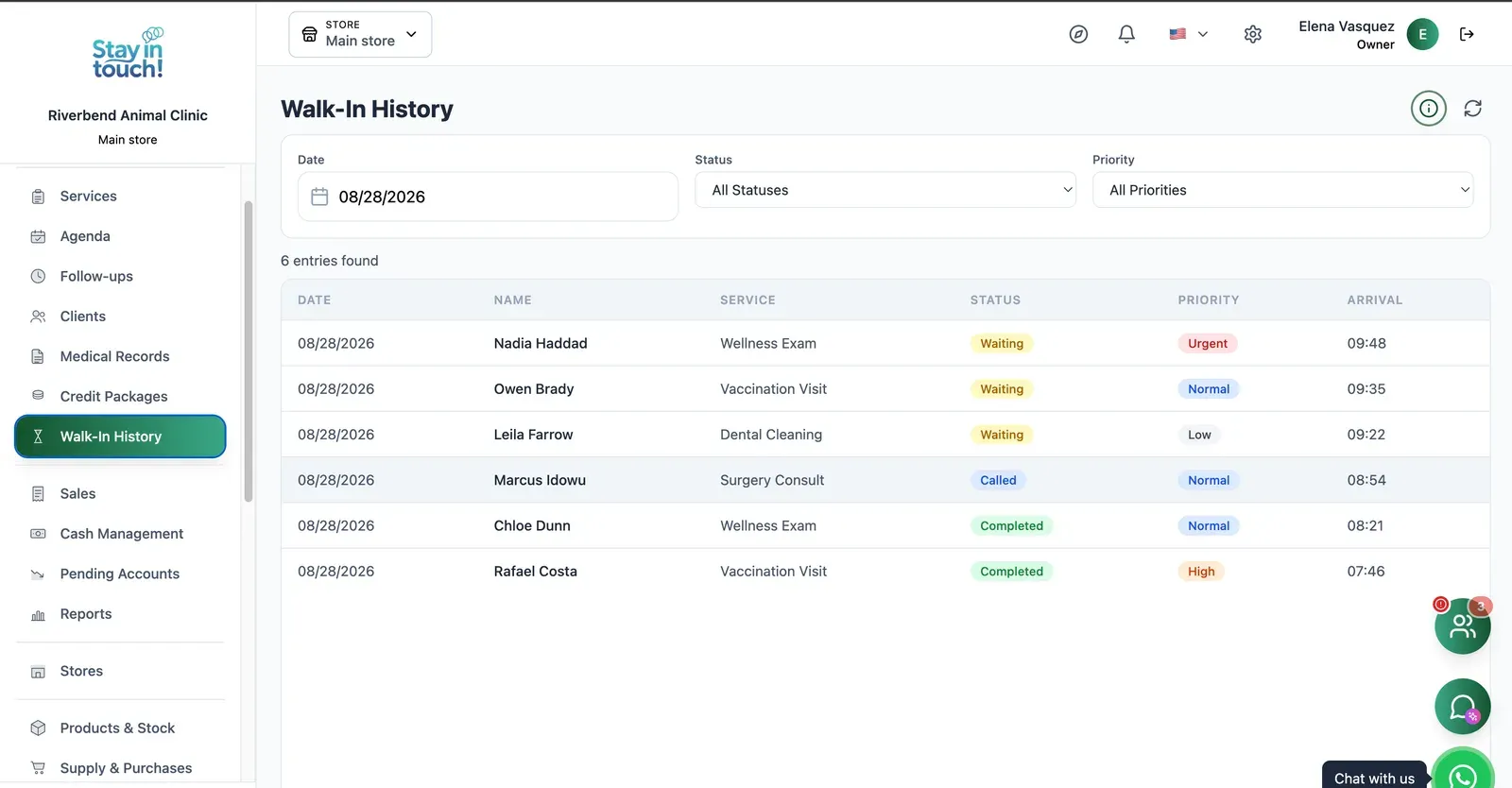
Waiting Room
Triage your walk-ins: waiting, called or seen, tagged urgent through low, with arrival times on every row.
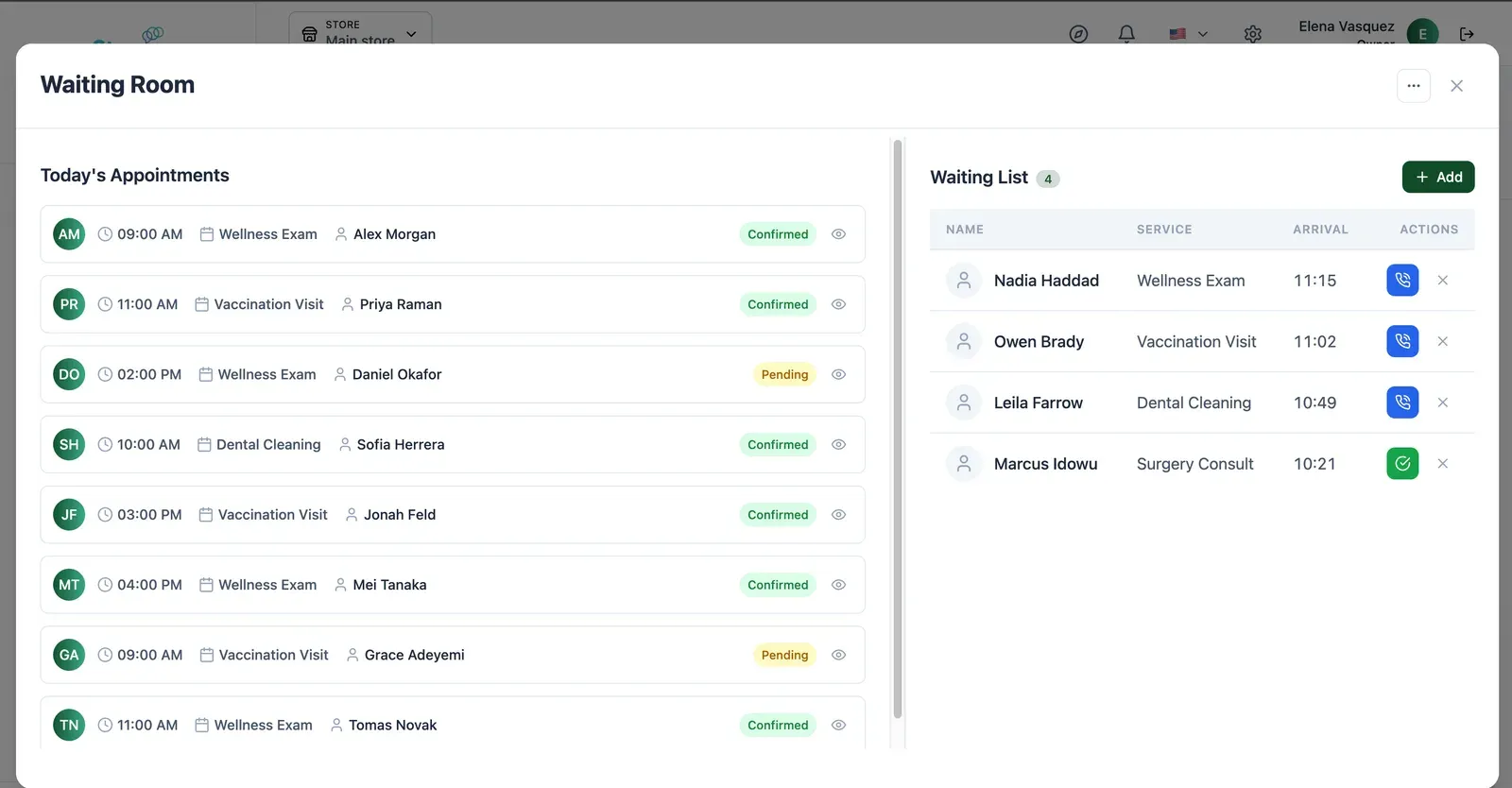
Live Waiting Room
Today's appointments on one side, who has arrived on the other — call the next one in with a single click.
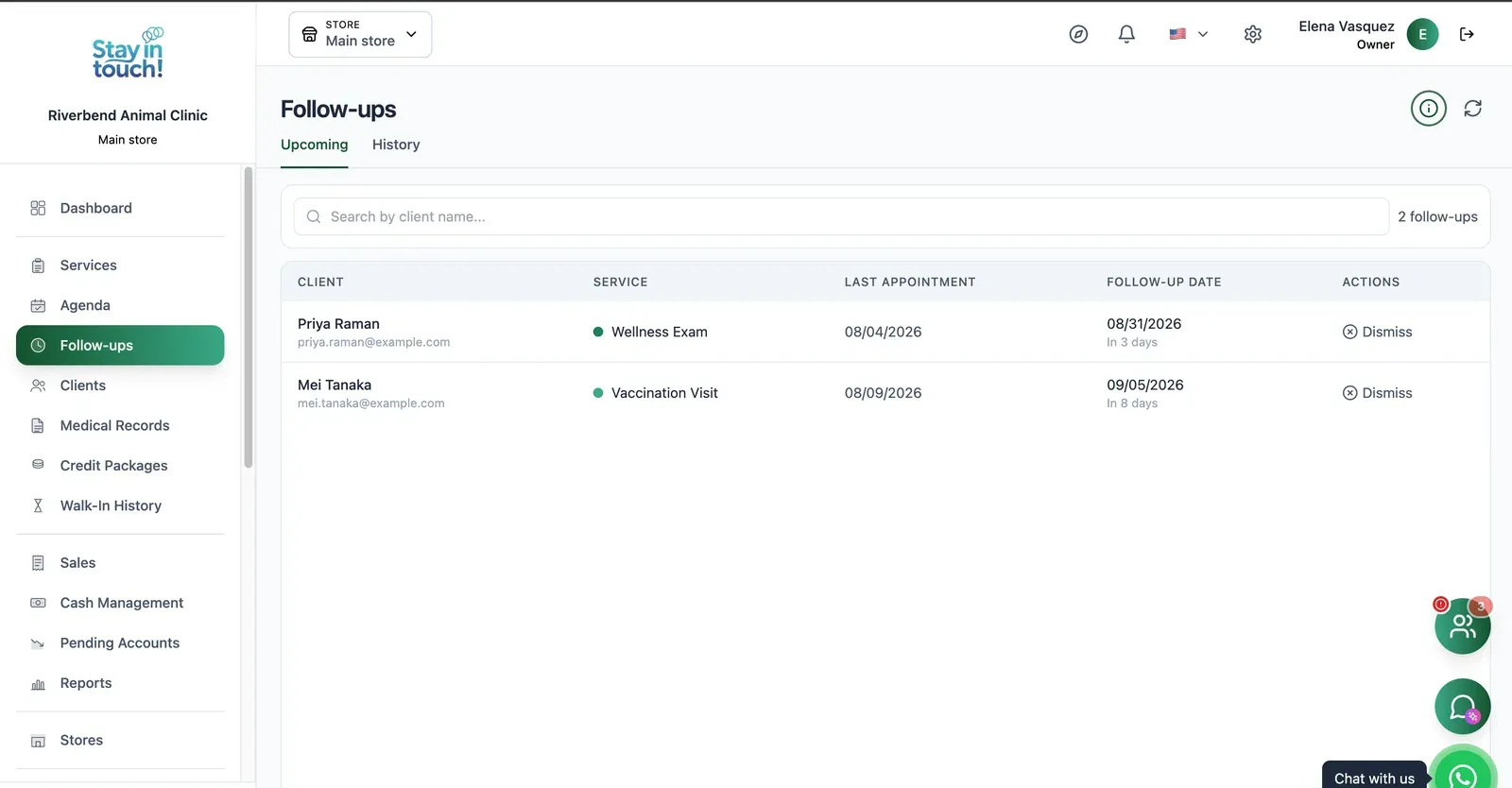
Follow-ups
Who is due back and when — post-visit checks and recalls queued automatically instead of living in someone's head.
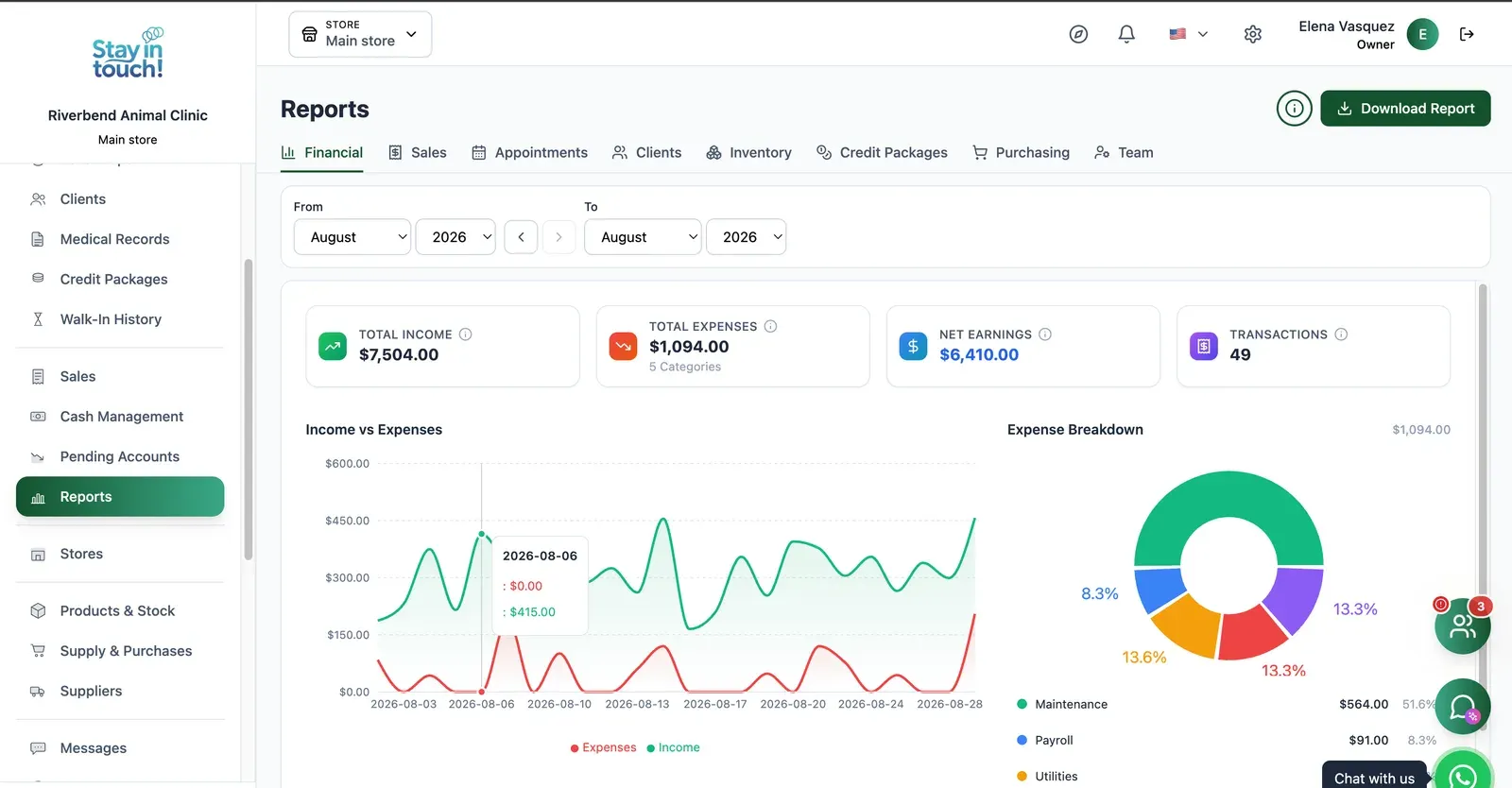
Reports
Revenue, expenses and net profit for any date range, with a trend chart, a category breakdown and a downloadable report.
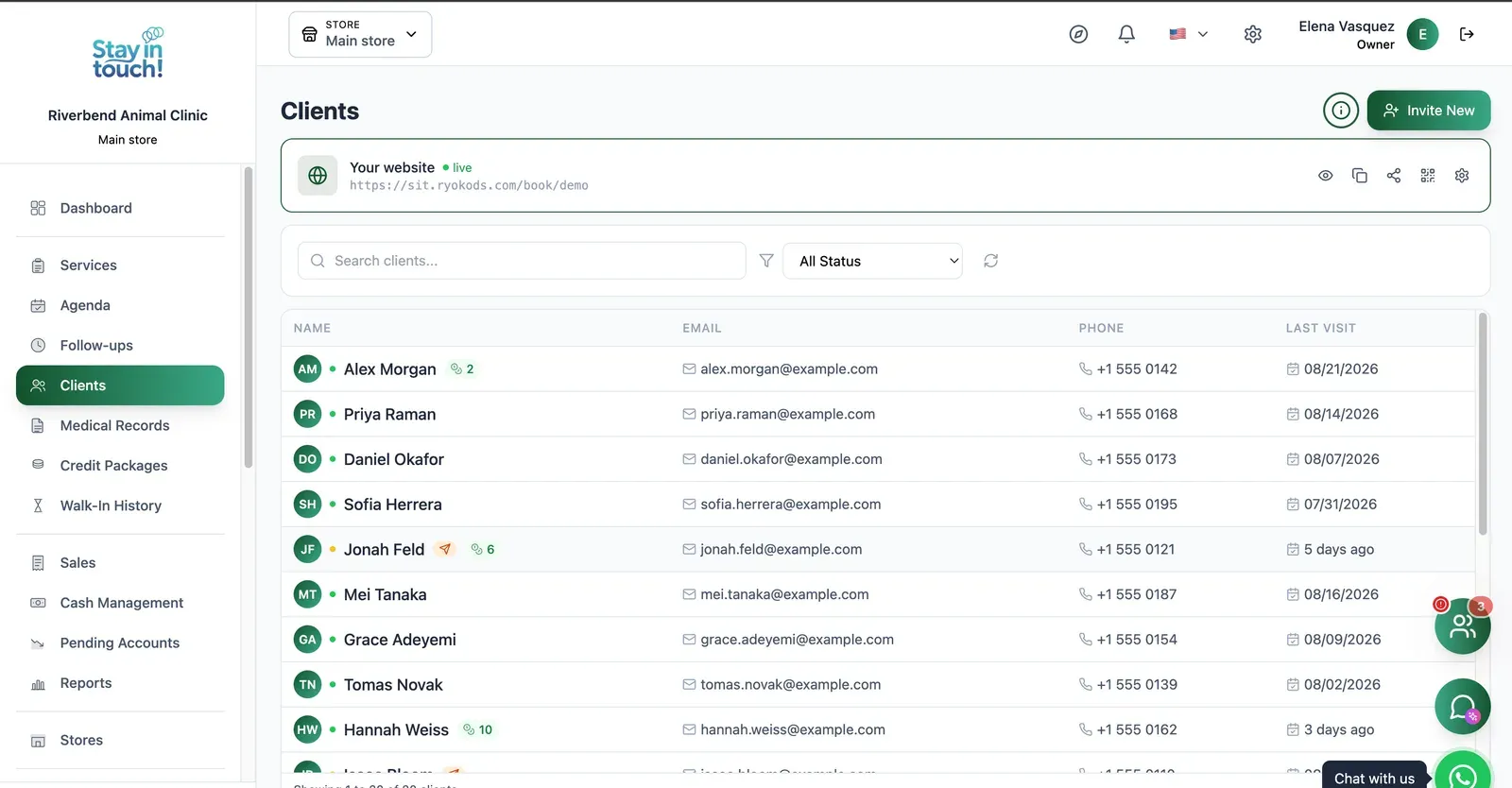
Pet Owners
Every owner with contact details and remaining credits, invitable to your booking site in one click.
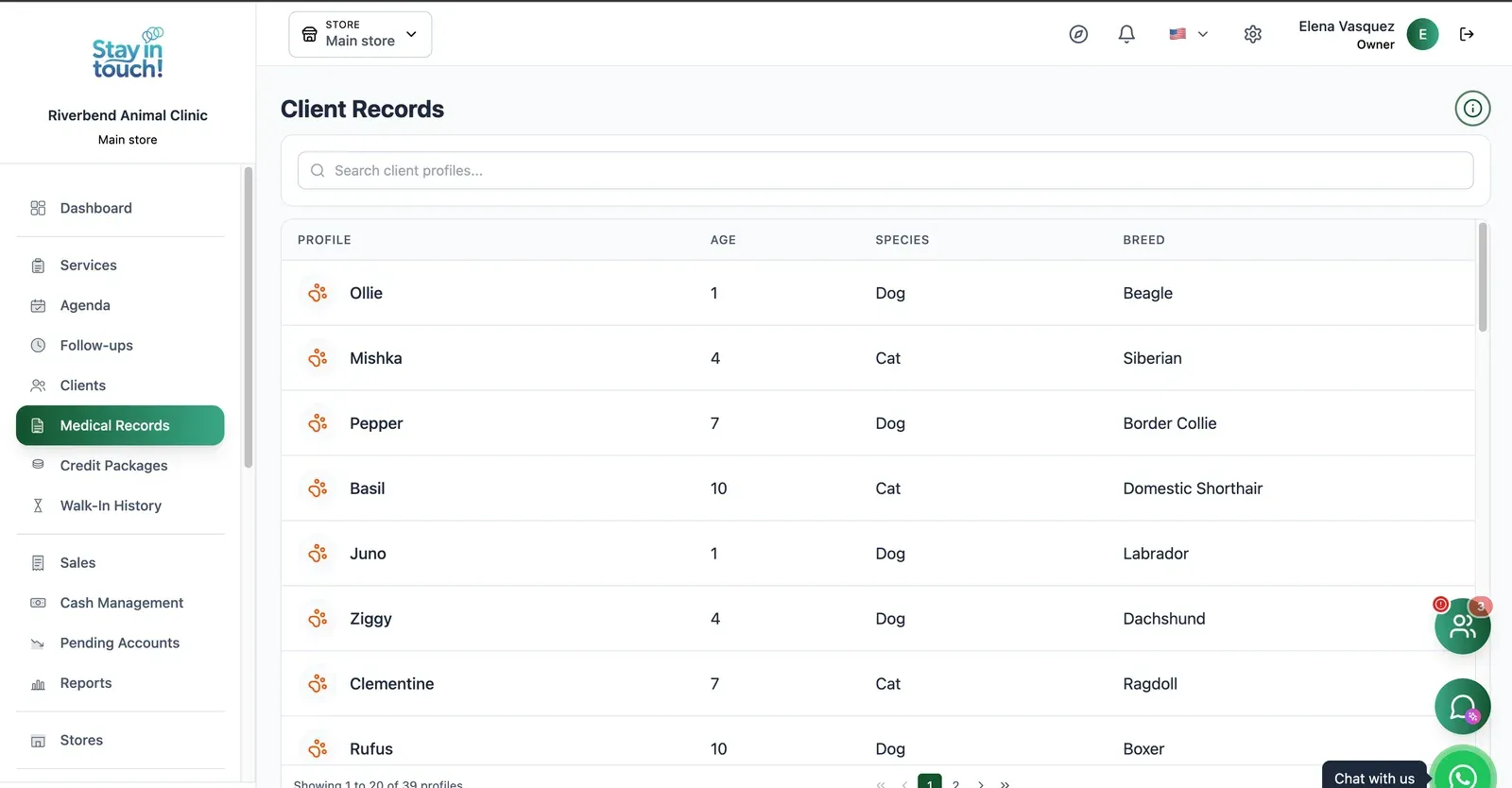
Medical Records
A profile for every patient — species, breed, age — carrying the clinical history that follows the animal across visits.
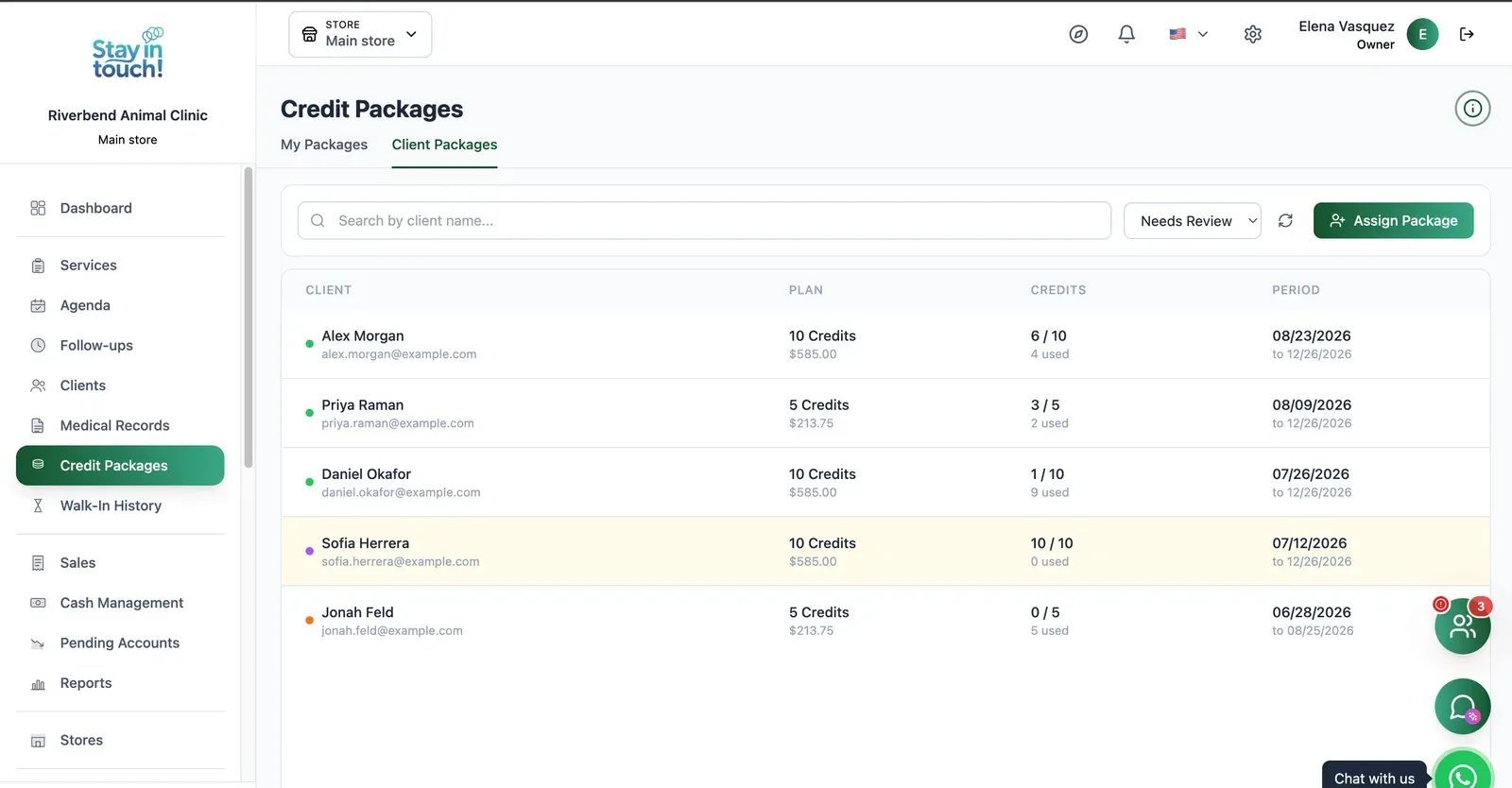
Credit Packages
Prepaid plans per client with credits used, credits left and validity — plus a filter for the ones about to expire.
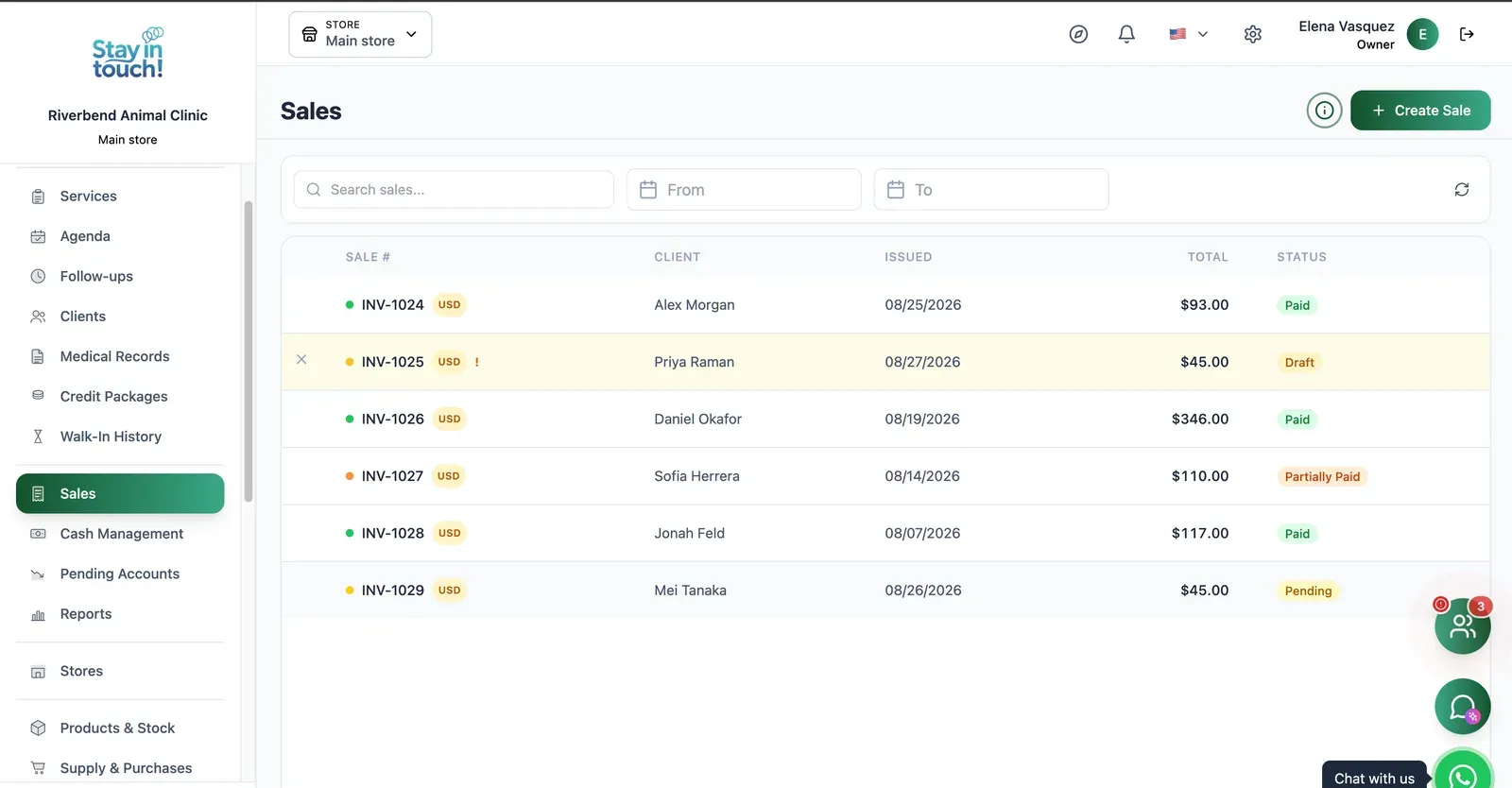
Sales & Invoices
Every invoice in one ledger — paid, partially paid, pending or draft — with the register built into the same screen.
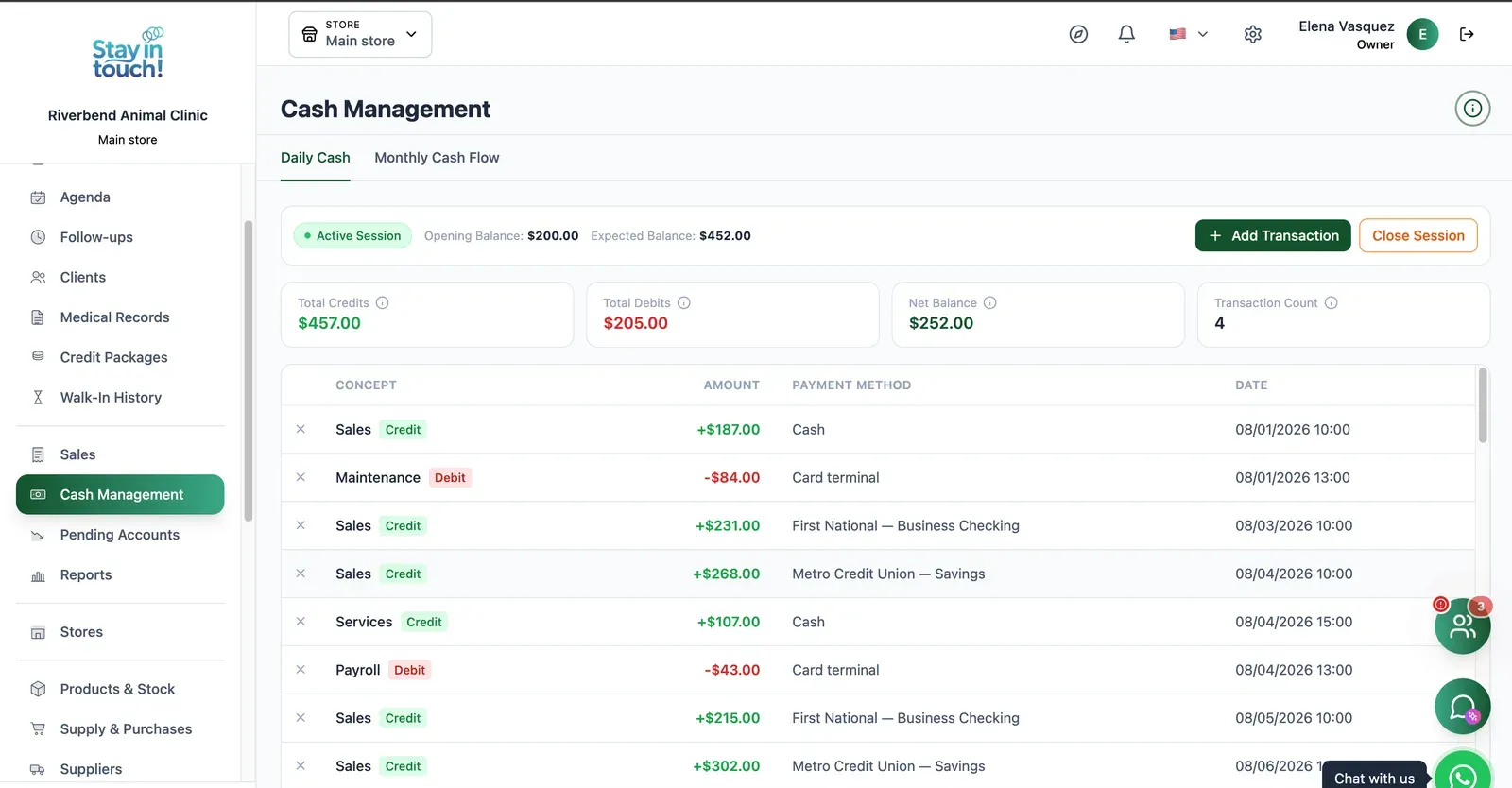
Cash Control
Open and close the register with opening and expected balances, income, expenses and every movement tagged by payment method.
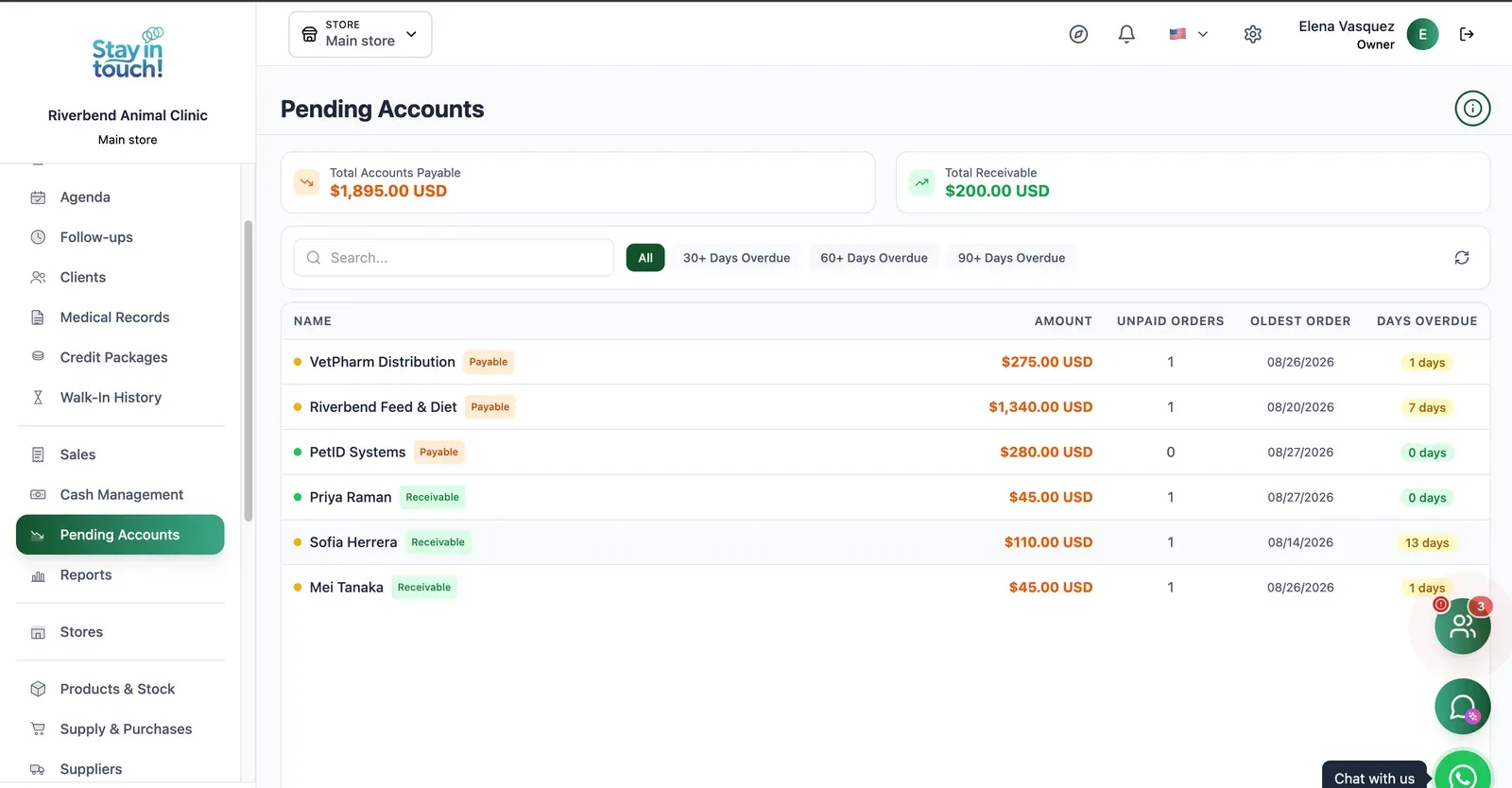
Payables & Receivables
What you owe and what you're owed, aged past 30, 60 and 90 days, with the overdue count on every row.
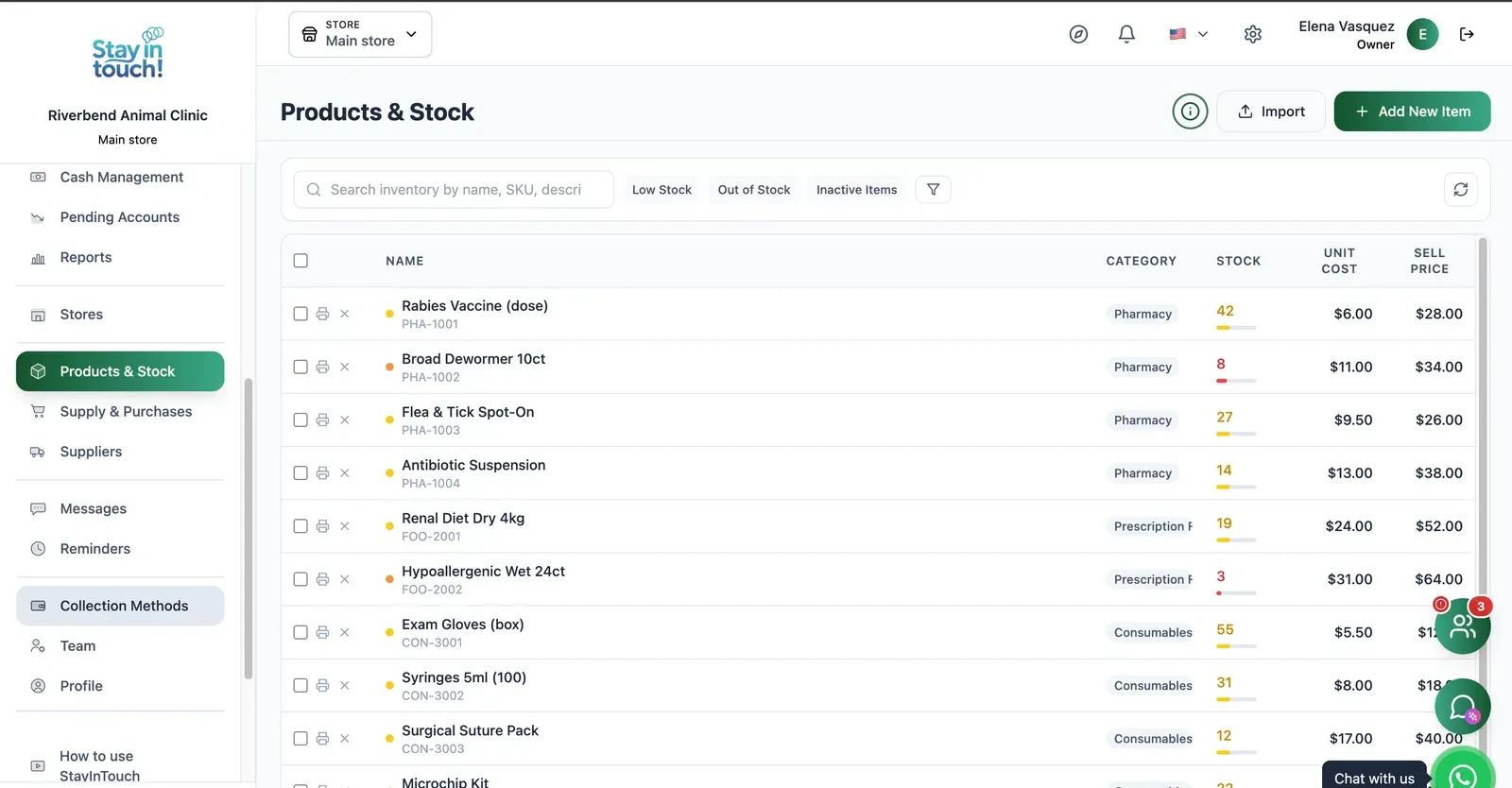
Inventory & Stock
Medication, medicated food and disposables with SKUs, stock bars, cost and sale price, and low-stock alerts.
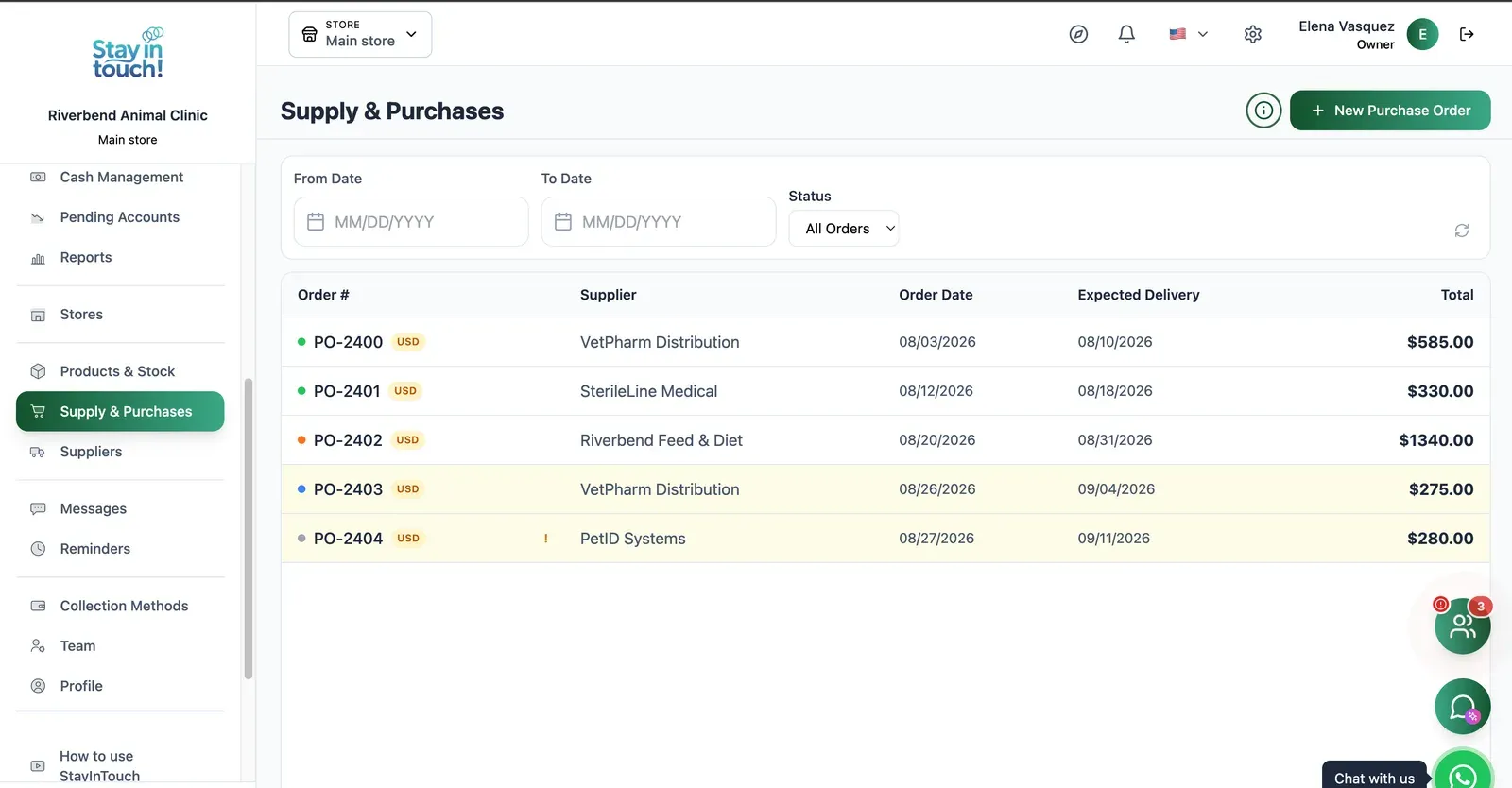
Purchase Orders
Track what you've ordered from whom, when it was placed and when it's due — with late deliveries flagged.
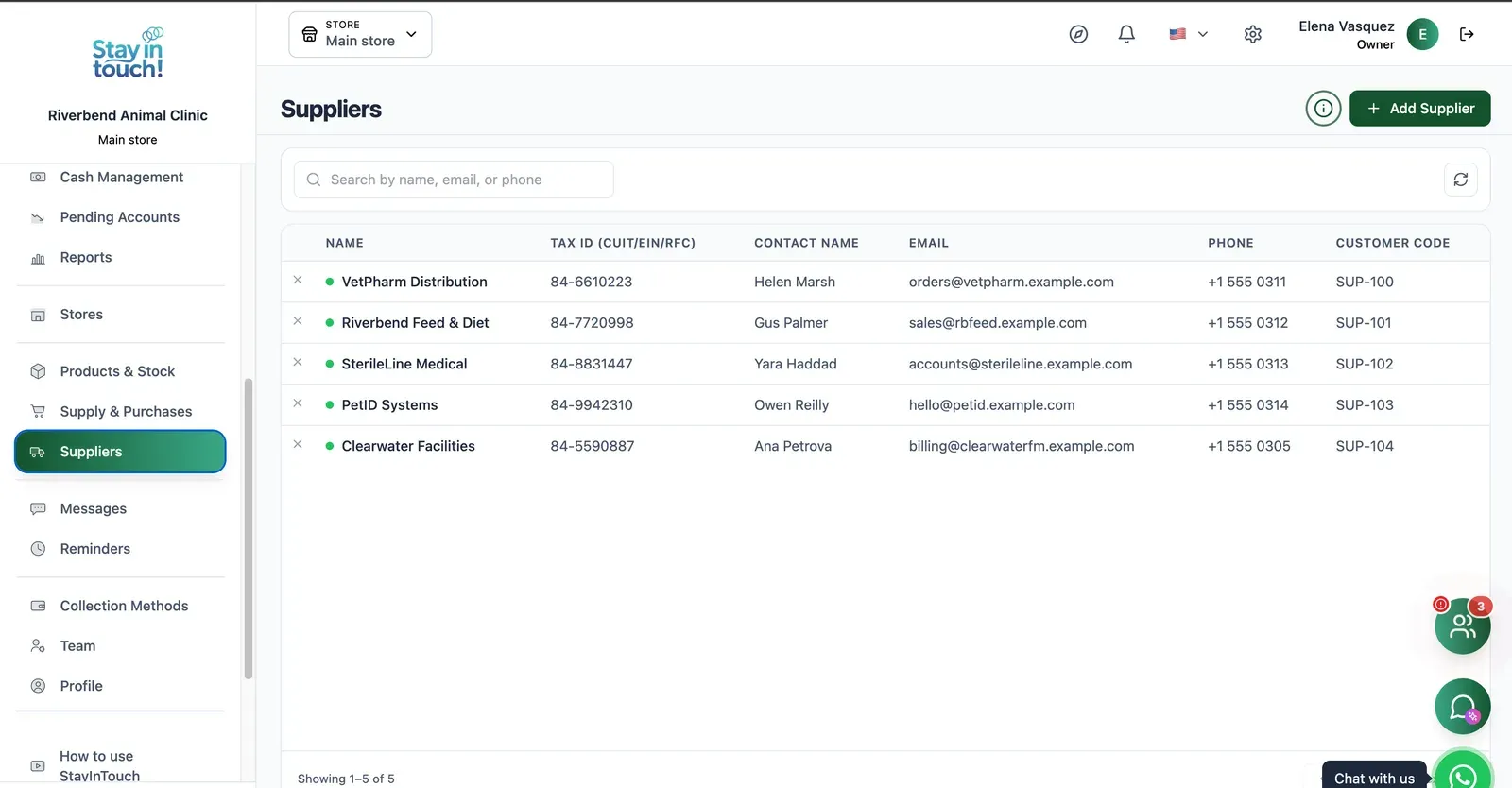
Suppliers
Your vendor book with tax ID, contact person, ordering email and internal supplier code.
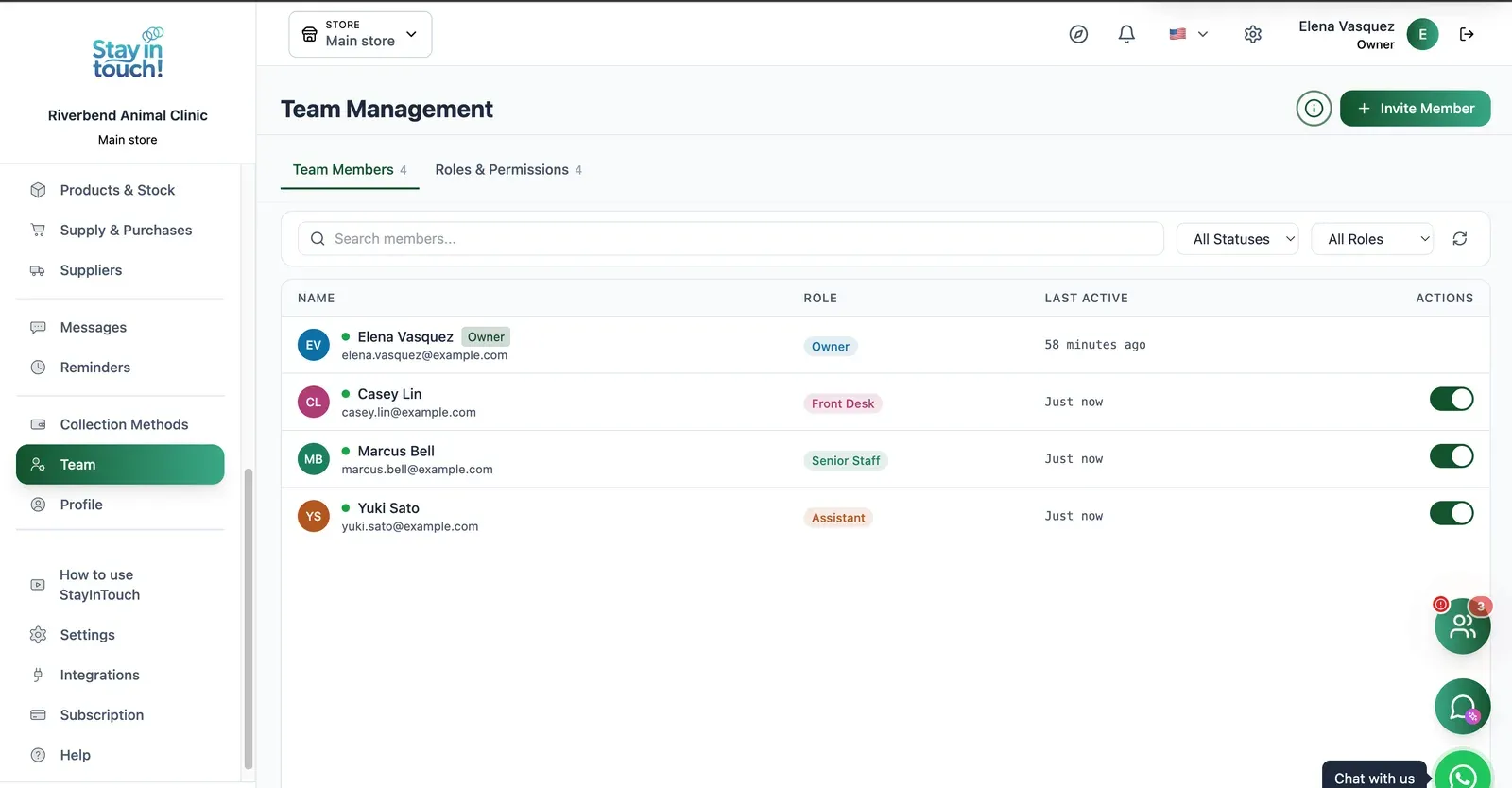
Team & Permissions
Your staff roster with roles, last activity and access toggles, plus a permissions tab as the business grows.
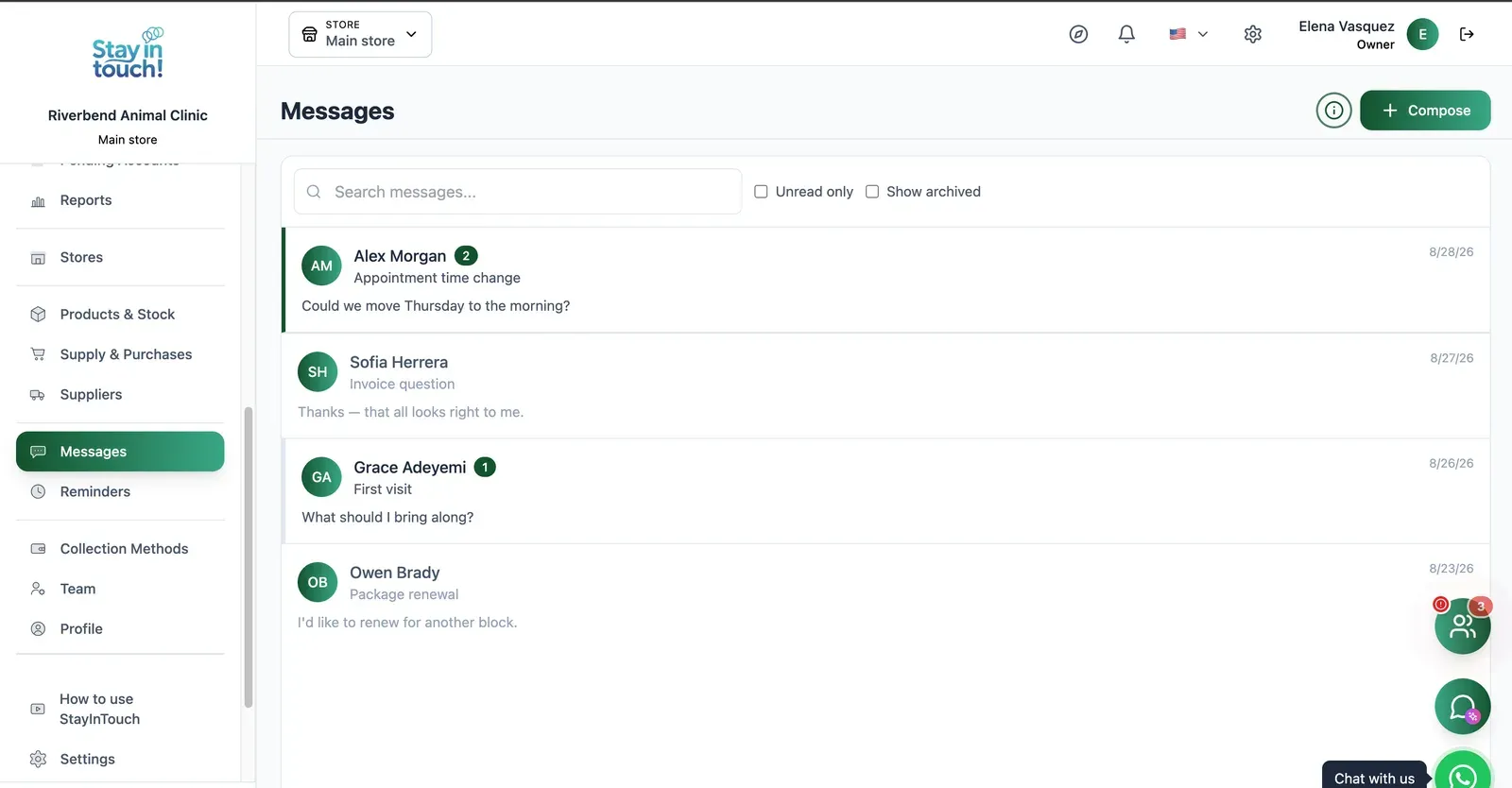
Messages
Client conversations kept in the record instead of scattered across personal phones, with unread counts and archiving.
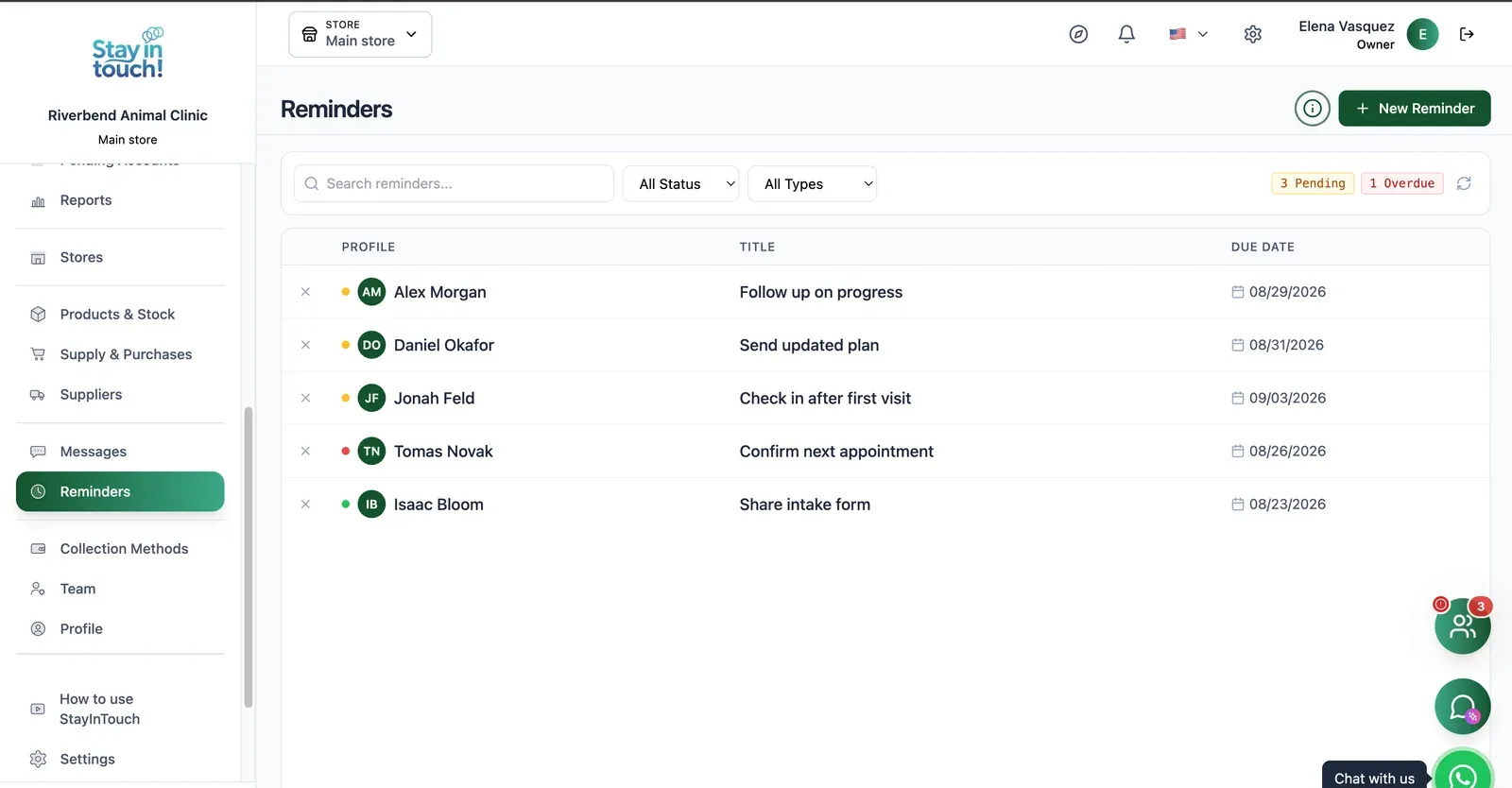
Reminders
Follow-up tasks tied to a client with due dates, so “I'll call them back” becomes something you can actually track.
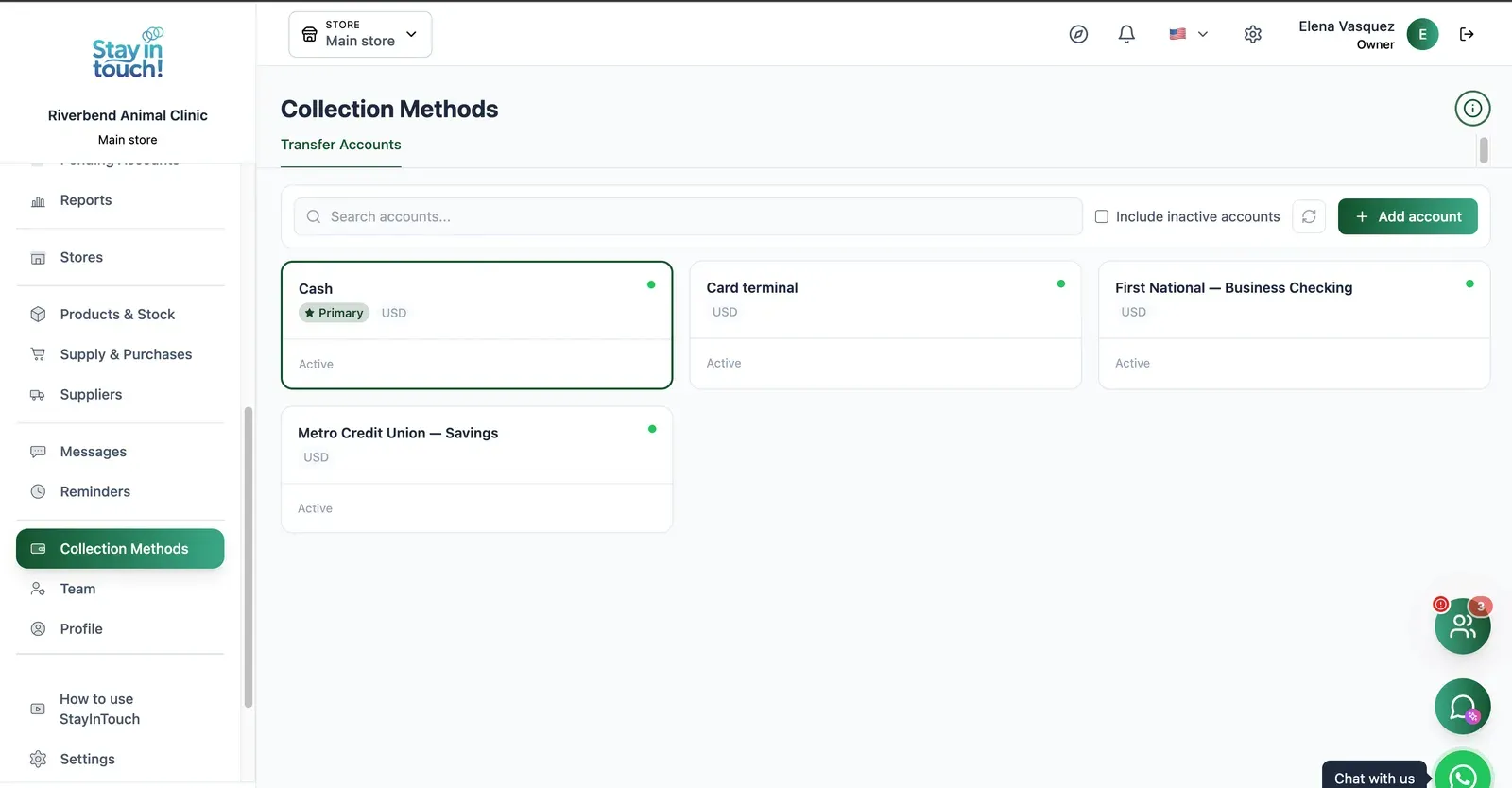
Payment Methods
Every way you collect — cash, card terminal, bank accounts — each with its currency and active state.
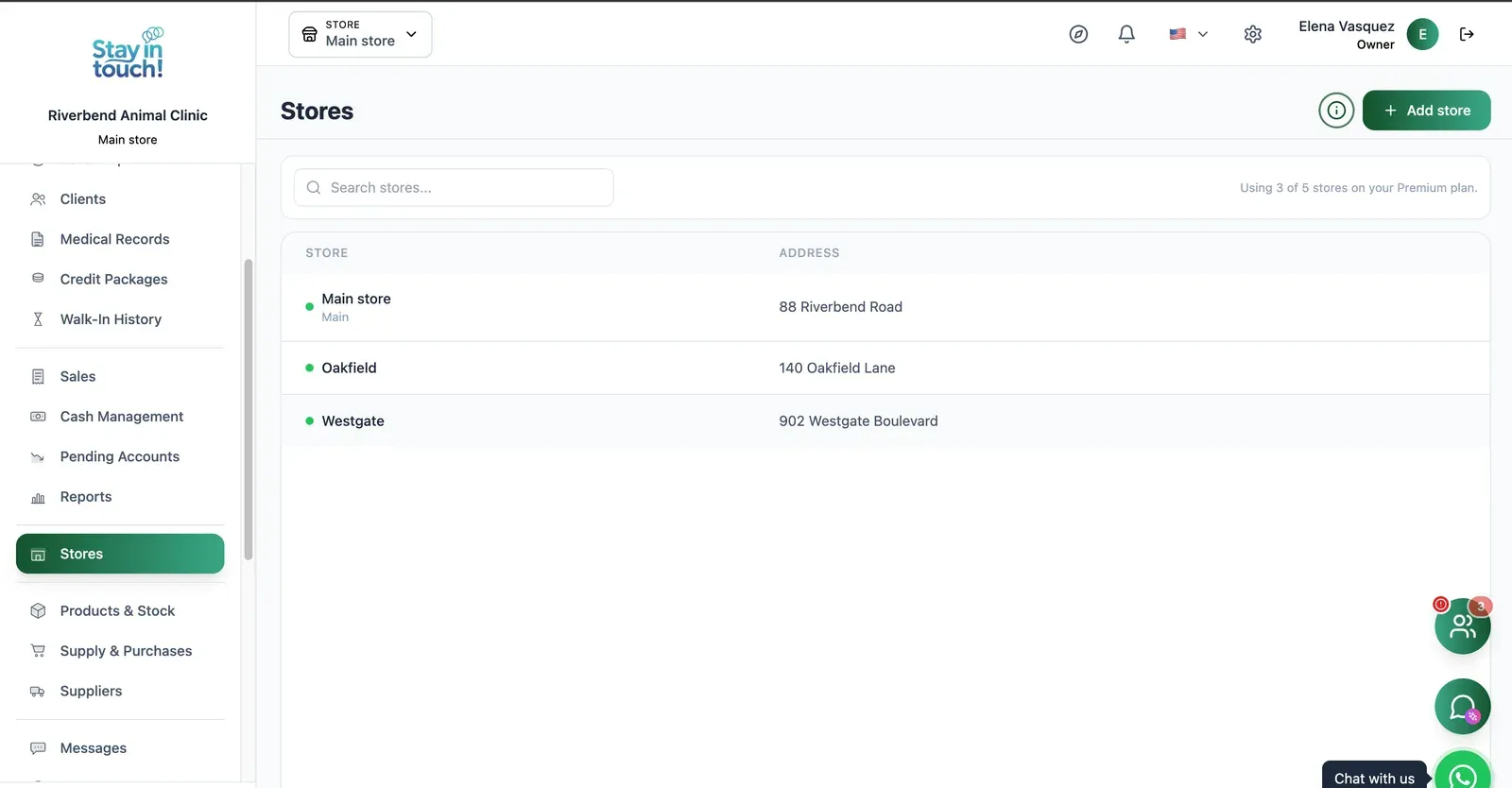
Multi-store
Run every store from one account on the top plan, each with its own team, stock and register.
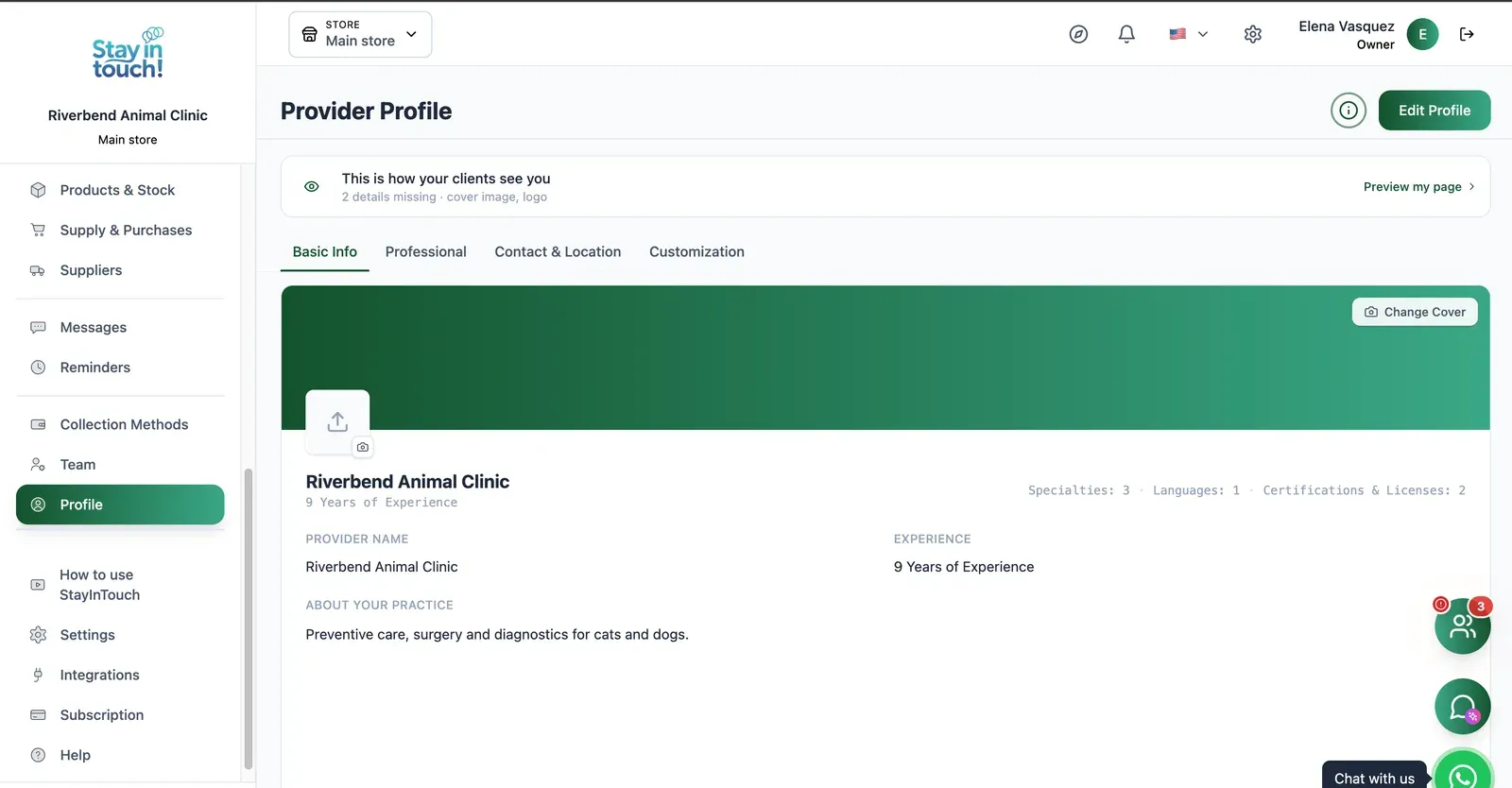
Public Profile
The client-facing page for your business: cover image, logo, description, specialties, languages and certifications.
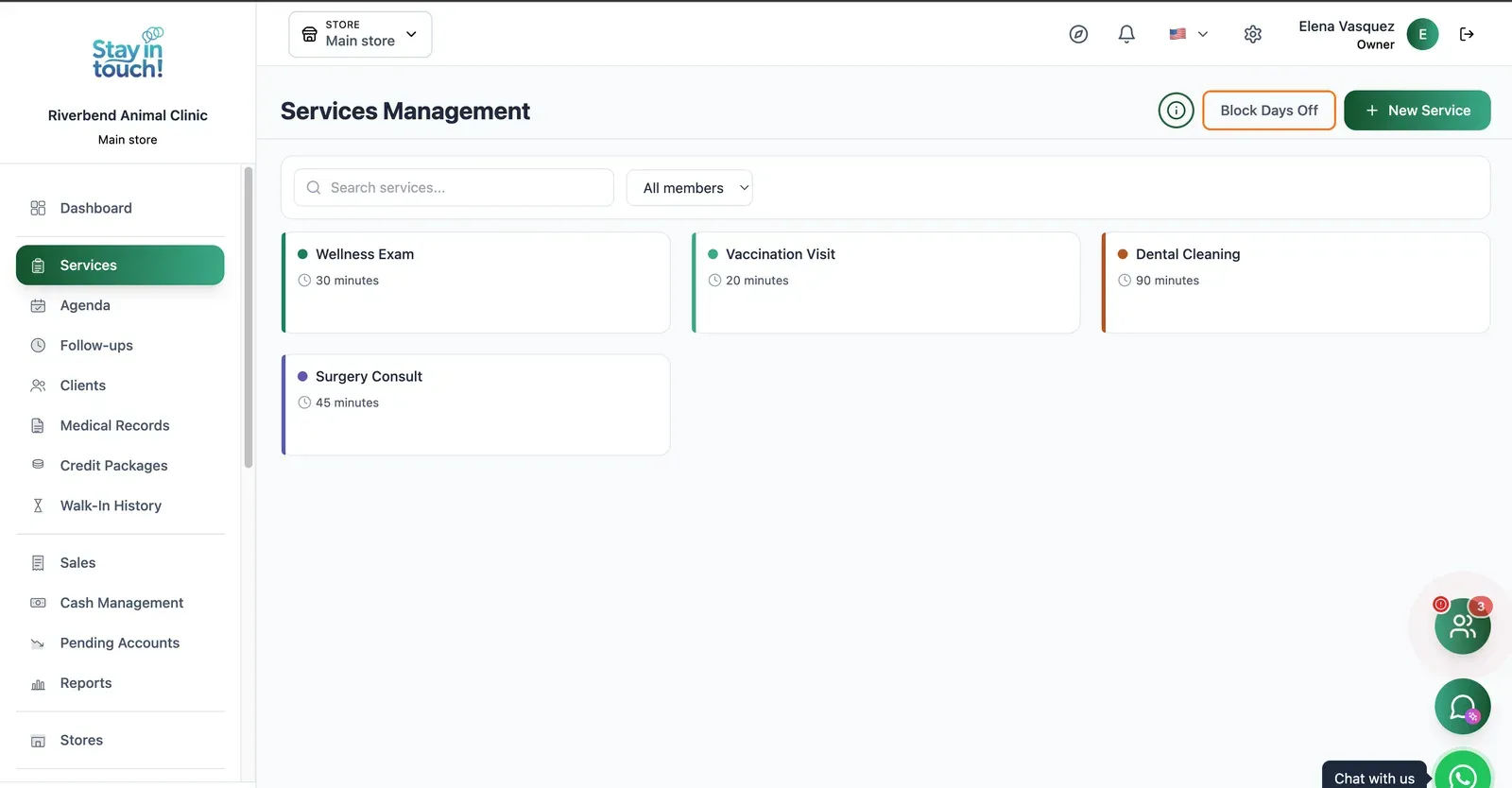
Services
Check-ups, vaccinations, dental cleanings and surgical consults, each with its own duration and blackout days.
Screen 1 of 23
Website included
Your own website, free from day one
Every Siimplo account publishes a page for your business: your services, online booking and your catalog — no designer, no hosting.
Your services on display, always up to date
Clients book themselves, 24/7
Product catalog with prices
Common questions
What's the difference between veterinary software, a system and a program?
Is there free veterinary software?
How long does implementation take?
Does it suit a single-vet practice?
Do I need to install anything?
Can I export my data if I leave?
Does it control pharmacy stock?
Is it available outside the US?
Try it on this week's patients.
Load the calendar and three records, and see whether it fits before deciding anything. The free plan asks for no card.
Get Started